25
APRIL, 2026
By: Honours students from the Department of Environmental ScIence, Rhodes University: Pozisa Ndzuzo, Wanga Ravuku, Samukelisiwe Mdlalose, Nkateko Khoza, Thandazile Pitiri, Rosie Godwin and Nthabiseng Matuludi.
On the Saturday morning of the 25th of April 2026, the Rhodes University Environmental Science Honours class arrived at the Matyana River in Scott’s Farm with a mix of excitement, nerves, and anticipation.
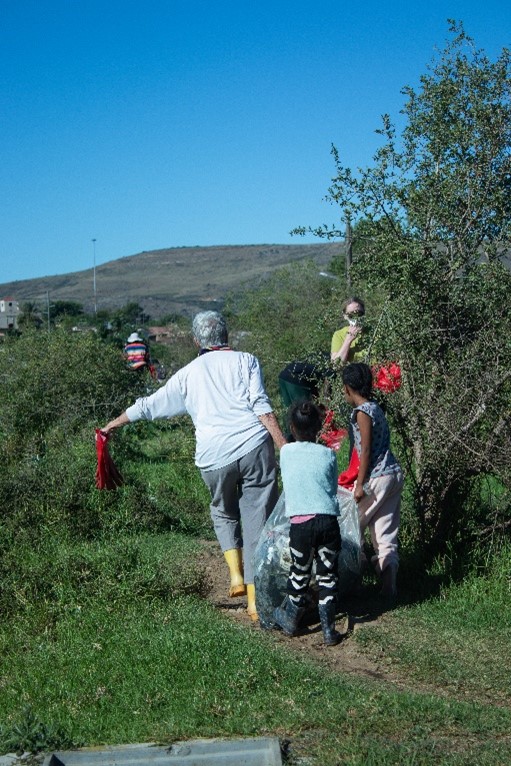
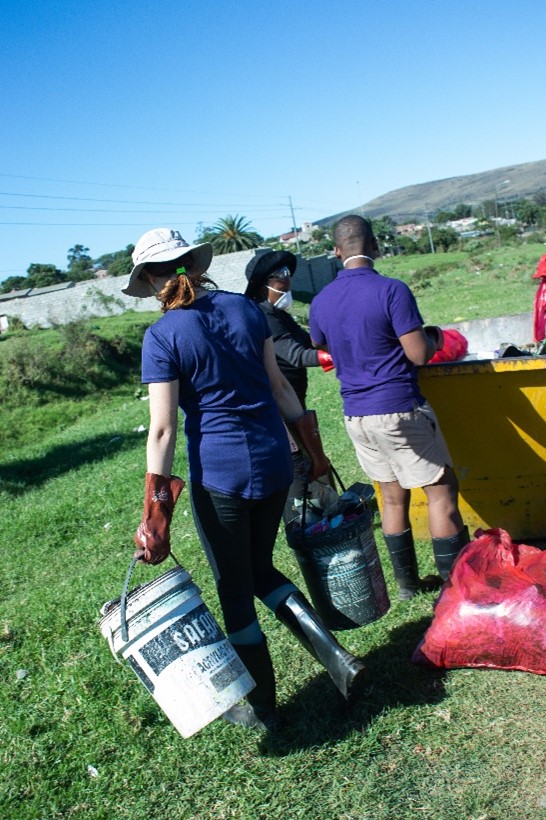
However, this quickly shifted to a feeling of overwhelm upon seeing the extent of the pollution. Waste was everywhere: in the river, along the riverbanks, and even farther into the surrounding area. Clothes were draped over grasses and used diapers and plastic waste were scattered. Some of the waste had clearly been there for a long time, embedded beneath vegetation and soil, making the task feel even more daunting. However, standing there with our rakes, buckets, and refuse bags in hand, we started collecting waste. Moving between the river and the skip, we picked up any visible litter along the way, filling our buckets as we went. Rakes were particularly useful for pulling waste trapped in the river and along the banks, especially items that were difficult to reach by hand. Because the pollution was spread across such a large area, it was initially difficult to know where to start. To address this, we effectively adopted a “divide and conquer” approach, spreading out across different sections of the river and surrounding land while continuously collecting waste as we moved.
Alongside us, the children eagerly joined in, their small but energetic hands picking up waste, running back and forth, and contributing just as much as anyone else. Their energy transformed the atmosphere, turning what initially felt like an intimidating task into a shared, collective effort. Slowly but surely, the skip began to fill, reflecting the impact of our combined efforts.
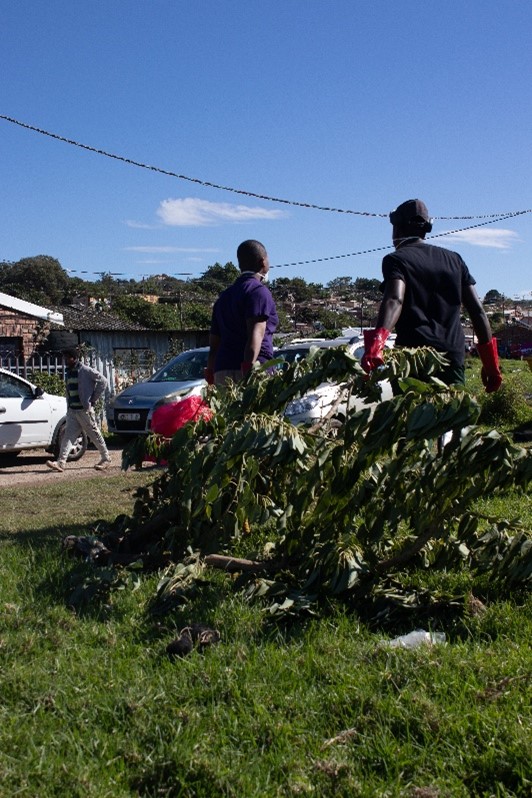
During the clean-up, we had interactions with community members, and we observed a range of responses. Some individuals expressed appreciation for the clean-up efforts, acknowledging the importance of the work being done. Others were more indifferent and simply passed by. One community member revealed that the pollution of the river is not only from a lack of care, but rather a lack of adequate municipal waste services. This has left residents with limited options, forcing them to dispose of waste in the river.
Another surprising observation was how perceptions of the clean-up were influenced by social factors such as race. One community member expressed the belief that the presence of white individuals in the River Rescue initiative meant that the project would be more successful. This highlighted how deeply rooted social dynamics continue to shape perceptions of credibility and effectiveness within community initiatives.
We also noticed upon arrival that some community members were cleaning up on the opposite side of the river. This demonstrated that there is local willingness to take care of the environment.
Back on the riverside, our cleanup efforts were visible as we walked back and forth between the river and the skip, making the progress tangible. This tangible progress and the children’s enthusiasm gave us a sense of purpose.
“This was fun, when I first got here in the morning, I was so excited and just wanted to get in the river” – Wanga, Environmental Science Honours student.
Now What?
Looking Ahead
The River Rescue initiative at Scott’s Farm does not end with a single clean-up; instead, it reveals a deeper and more persistent challenge. While ongoing clean-up efforts and community involvement are already in place, the continued presence of waste in the Matyana River suggests that physical interventions alone are not enough. What is needed moving forward is a stronger and more widespread sense of environmental awareness within the community.
For Scott’s Farm, the future of the river depends not only on improved waste services, but also on how people understand and value their environment. The clean-up highlighted that some residents are willing to take action, yet others remain indifferent, often due to limited options or lack of awareness about the long-term impacts of pollution. Strengthening environmental awareness can help bridge this gap by encouraging more consistent, everyday practices that reduce waste entering the river in the first place.
For the River Rescue initiative, the way forward lies in continuity and collaboration. This means placing greater emphasis on education and awareness-building rather than only clean-up activities. The enthusiasm shown by the children during the clean-up suggests that they could become key agents of change within their own households and community.
As an Environmental Science Honours class, this experience challenges us to think critically about the limits of short-term solutions. It highlights the importance of communication, education, and community engagement as tools for environmental change. Moving forward, our role could involve supporting awareness initiatives, sharing knowledge in accessible ways, and helping to amplify the importance of protecting local environments like the Matyana River.
Ultimately, the future of River Rescue is not only about removing waste, but about reducing the need for clean-ups altogether. This can only be achieved when awareness is strong enough to influence everyday behaviour, creating a community that actively protects and values its environment.
“Yoh! This place is so dirty, but things will get better now that White people are involved” – a passing bystander.
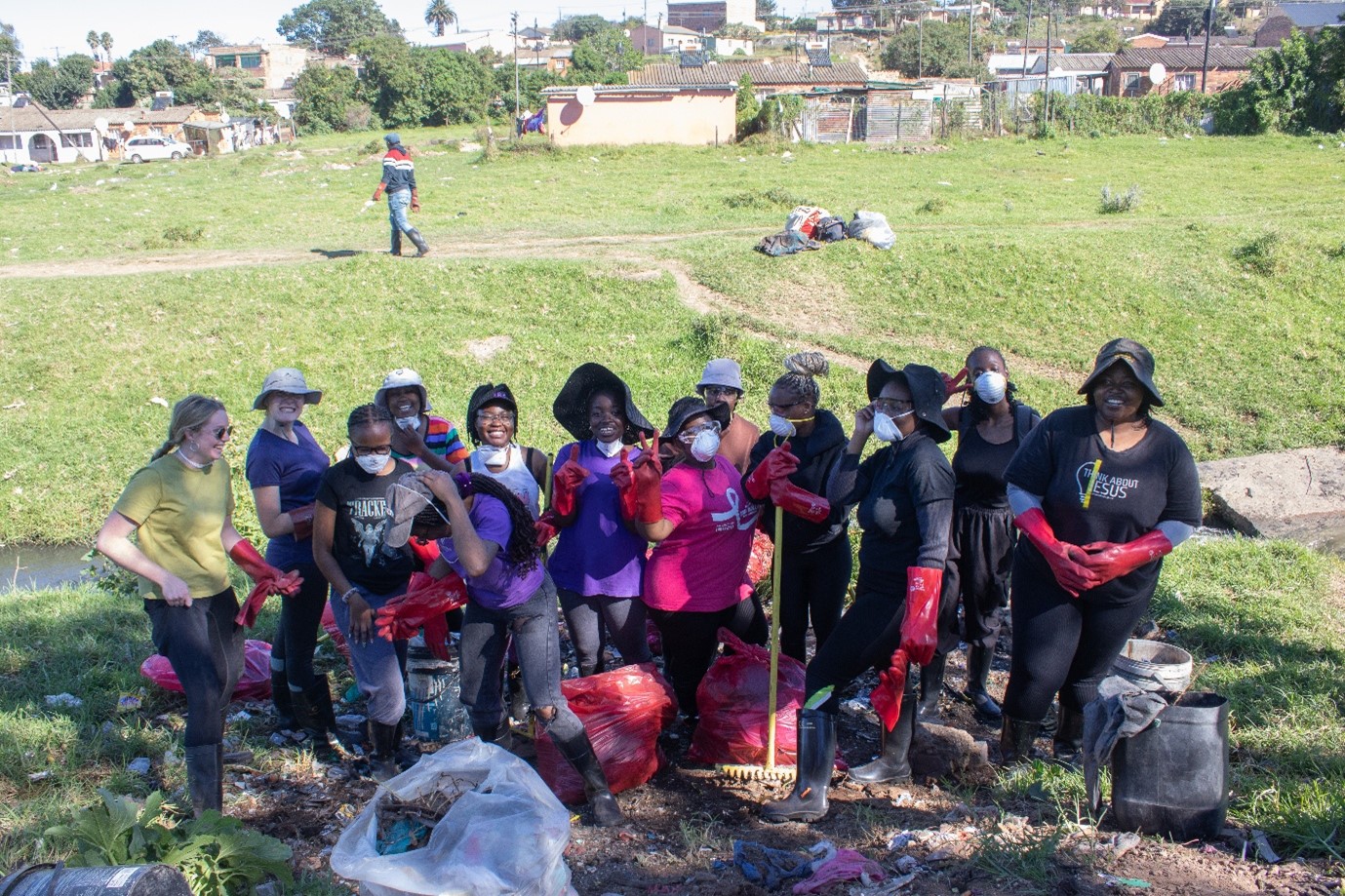
We would also like to thank Thato Tseole, Grocott’s Mail for capturing these lovely pictures.